


Understanding Cellulite and How Treatment Helps
Cellulite is an extremely common condition that affects 90% of women and 20% of men both fit and obese. While unsightly, cellulite presents no major health risks but is one of the most difficult conditions to get rid of due to the variety of factors that can cause it.
There are many misconceptions regarding how cellulite occurs and it is a widely debated topic within the medical and aesthetic communities. However, a large majority of experts do agree on several factors that have assisted us in developing a highly effective, long lasting solution to rid your clients of unattractive cellulite.
Here’s what this really means: cellulite isn’t just “extra fat.” It’s usually a mix of circulation, connective tissue, hormones, genetics, and daily habits. Once you understand the root contributors, it becomes much easier to choose the right cellulite approach and set realistic expectations.

Causes of Cellulite
Cellulite can develop for several reasons, and it’s often more than one factor at the same time.
-
Circulation
Unhealthy lymphatic system function, poor circulation, and blood flow within the problem area will increase the likelihood to develop cellulite. -
Hormones
Hormone levels and imbalances involving estrogen, insulin, noradrenaline, thyroid hormones, and prolactin are part of the cellulite production process. -
Collagen
Poor collagen production can weaken the skin’s support structure, making dimpling and uneven texture more noticeable, especially in areas where fat sits closer to the surface. -
Genetics
Genetic predispositions of certain genes are required for cellulite development. Genes may predispose an individual to characteristics associated with cellulite, such as gender, race, slow metabolism, distribution of fat just underneath the skin, and circulatory insufficiency. -
Lifestyle
Lifestyle Factors that assist in developing cellulite may be more prevalent in smokers, those who do not exercise, and those who sit or stand in one position for long periods of time. -
Clothing
Clothing like underwear with tight elastic across the buttocks (limiting blood flow) may contribute to the formation of cellulite.
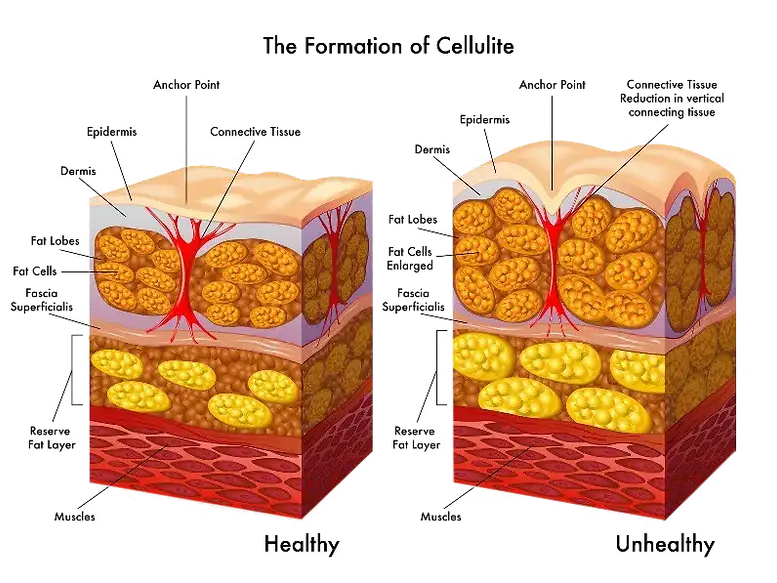
How Cellulite Forms and How invisa-RED™ Helps Smooth It
Cellulite consists of enlarged adipose tissue or fat cells and is a type of connective tissue that is classified as a connective tissue disorder. Due to low collagen production, the connective tissue allows the fat cells to rise towards the skin. Because of this, cellulite (fat cells) bulge and push upwards towards the dermis giving the “orange peel” or “dimpling” effect at the dermis level in different grades. We place these into four grades or types.
Cellulite Severity Levels (Grades 0–3)
0 – Smooth (no visible dimpling in the skin sitting or standing)
1 – Mild Visibility (slight dimpling when sitting, but not visible standing)
2 – Moderate Visibility (Dimpling is visible, even if slightly, but not lying down)
3 – Severe Visibility (heavy dimpling or pitting in the skin, sitting or lying down)

Treatment Approach Based on Your Cellulite Grade
There are several treatment levels depending on the grading. Here’s what matters most: cellulite is not just a surface issue, so the best approach supports the skin, connective tissue, circulation, and lymphatic function together. When treatment targets these systems, the skin can look smoother, firmer, and more even over time.
Treatments help increase fresh blood, water, nutrients, and oxygen saturation in and around the area as well as helping to stimulate collagen and elastin production to tighten the connective tissue deficiency of the cellulite.
This also helps to stimulate the lymphatic system to remove unwanted toxins and in removing the contents of the cells and creating more collagen production to the tissue and skin.
Treating Cellulite from multiple points provides faster and longer-lasting results. Our technology provides clients the results they have been searching for.
invisa-RED™ provides multiple solutions
-
Collagen Support: Stimulates collagen to tighten skin and connective tissue, reducing the look of cellulite.
-
Fat Cell Reduction: Helps reduce the size of fat cells in the treated area for a smoother appearance.
-
Lymphatic Support: Supports lymphatic drainage to help move out retained fluid and unwanted toxins.
-
Metabolic Boost: Helps increase ATP activity to support cellular energy and metabolism in the area.
-
Improved Circulation: Enhances blood flow and nutrient delivery to support healthier, more even-looking skin.
Cellulite Treatments
How the Treatment Works
Cellulite is caused from weakened connective tissue and enlarged fat cells that are unresponsive to diet and exercise causing a dimpling effect. The pulsing laser light increases collagen production to strengthen the connective tissue and activates the enlarged fat cells to open, allowing the contents to leave the cell and be utilized in the body’s natural metabolism. The fat that is not utilized will then be eliminated through the lymphatic system. The result is a smooth cellulite free area of the body.
This treatment supports the skin from more than one angle. When collagen increases, the skin’s support layer becomes stronger, which can help reduce the appearance of puckering. At the same time, improved circulation and lymphatic movement can help reduce fluid stagnation in the area, which is one reason cellulite can look more noticeable. Because the process relies on your body’s natural response, results tend to look gradual and natural instead of sudden or overcorrected.
To help your results along, we typically recommend staying well hydrated and keeping light movement in your routine (even walking helps). Hydration supports the lymphatic system, and consistent movement encourages better circulation, which can make a real difference in how the treated area looks over time.
Treatment Frequency and Recommended Sessions
Although visible results can be seen in as little one treatment, clients will see optimal results after multiple short treatments which are recommended three times per week for the duration of your treatment schedule. Not only will you notice a reduction in cellulite, but also see a reduction in the circumference of the treatment area, as well as an improvement in the skin’s texture.
Treatment session needs vary from client to client. A consultation with a clinician will give you a better idea of how many treatment sessions you will need to achieve your desired results.
Practically, cellulite changes based on how your body responds, your starting grade, and the area being treated. Some clients with mild dimpling see faster visible smoothing, while more advanced cellulite typically needs a longer series for the best outcome. Your provider will also factor in your tissue density, skin elasticity, and lifestyle habits that can affect circulation.
Most people do best when they commit to the schedule early on, then reassess progress along the way. During your plan, we can adjust intensity and treatment focus based on how your skin is responding. The goal is not just short-term improvement, but a result that holds up over time.
Post-Treatment Downtime and Recovery
No. The treatments are non-surgical, non-evasive and pleasant. Treatments are very relaxing, and studies show the effectiveness of our technology in cellulite reduction without any of the side effects of invasive procedures.
After treatment, some clients notice mild warmth, temporary redness, or slight tenderness in the area, but these effects usually fade quickly. You can return to work, errands, or workouts the same day. There are no incisions, no anesthesia, and no recovery period, which is why this option is popular for people who want results without interruption.
Areas We Commonly Treat
Any area of the body can be treated. The most common areas are the back of legs, hips, thighs, buttocks, and waist. We can tailor treatment based on where cellulite is most visible for you and where you want a smoother look. Many clients choose to treat more than one zone over time, especially when cellulite appears in clusters across adjacent areas like thighs and buttocks. During your consultation, we’ll map out the most effective zones so treatments stay targeted and efficient.
Long-Term Maintenance and Results Support
Once clients have reached their desired goals, we recommend a maintenance schedule of one to two treatments monthly. Maintenance helps protect your results as your body continues to change over time. Things like stress, hormones, travel, prolonged sitting, and hydration levels can all affect how cellulite looks. A simple monthly routine can help support collagen, circulation, and lymphatic flow so skin stays smoother and more even-looking long-term.
Ready to Get Started?
If you’re ready to smooth the look of cellulite and feel more confident in your skin, book a consultation and we’ll recommend the right plan based on your cellulite grade, treatment areas, and goals. You can also explore Red Laser Therapy in Glendale, AZ for more details on the technology and how it supports skin tightening and texture improvement.